
A tagine in Agadir can mean two things at once: the cone-lidded clay pot, and the slow-cooked stew made inside it. On a menu or in a market the word covers a whole family of dishes, and knowing a few of them makes ordering much easier.
This guide explains what a tagine is, four classic types, how to order and eat one, and what to ask when you are on the Atlantic coast. It uses published sources read on 21 October 2026, and it tells you where we could not find an answer rather than guessing.
Quick answer
A tagine is a slow-cooked stew of meat, poultry, fish or vegetables, with spices, cooked in a shallow clay pot with a tall cone-shaped lid that returns steam to the food. It is usually eaten with bread. The classics are chicken with preserved lemon and olives, and lamb with prunes and almonds. We found no source on which tagines Agadir restaurants serve, so ask what is on offer and what is fresh that day. If you would rather cook one yourself, our Agadir cooking class is built around the tagine pot.
What is a tagine?
Wikipedia describes a tagine as both a Maghrebi stew and the earthenware pot it is cooked in. The pot has a shallow base and a tall cone or dome lid, and the lid lets condensation run back into the food, so little added water is needed. Traditional pots were cooked over charcoal in a clay brazier, and today they are also used in a slow oven or on a low hob, often with a heat diffuser.
The seasoning is aromatic rather than hot. Common spices are ginger, cumin, turmeric, cinnamon and saffron, and paprika and chilli appear in vegetable tagines. Nuts and dried fruits are used in some dishes, which matters if you have an allergy. Tagines are generally served with bread, and the dish may be brought to the table in its pot with the lid lifted just before you eat.
Four classic types of tagine in Agadir and across Morocco
| Type | What is in it | Worth knowing |
|---|---|---|
| Chicken with preserved lemon and olives | Chicken, preserved lemon, olives and spices | A recipe site calls it one of Morocco’s most quintessential tagines; traditionally eaten with khobz, a round crusty bread |
| Lamb with prunes and almonds | Lamb cooked slowly with prunes, almonds and warm spices | The other classic, and a sweet-and-sour style that Wikipedia also describes |
| Vegetable tagine | Vegetables and spices | Vegetable tagines are the meat-free option; ask whether stock or meat is used |
| Fish or seafood tagine | Fish or shellfish with vegetables | Seafood is one of the ingredients Wikipedia lists for tagines; ask what is fresh |
Couscous is a separate dish. The author of the chicken tagine recipe notes that restaurants often serve a tagine with couscous, although Moroccans did not traditionally eat the two together.
Tagine in Agadir: what the coast changes
Agadir is on the Atlantic, and Wikipedia says Morocco has more than 3,000 km of coastline and that sardines are commercially important, so fish and shellfish are part of the food culture. We found no source that lists which fish tagines are cooked in Agadir restaurants, and we have no menu of our own to quote, so we do not name one. Ask what is fresh that day, and whether it is cooked in a tagine or grilled.
How to order and eat a tagine
- When you order a tagine in Agadir, ask what is in the dish, and tell the staff about allergies, since nuts and dried fruits appear in some tagines.
- Expect bread to come with it, since tagines are generally served with bread.
- Share if you can: tagines are served in a pot, and a second dish gives you a second flavour.
- Be cautious with souvenir pots. Wikipedia says some tagine pots are decorative only and cannot be heated, and that sudden temperature changes can crack a real one.
Cooking a tagine in Agadir with us
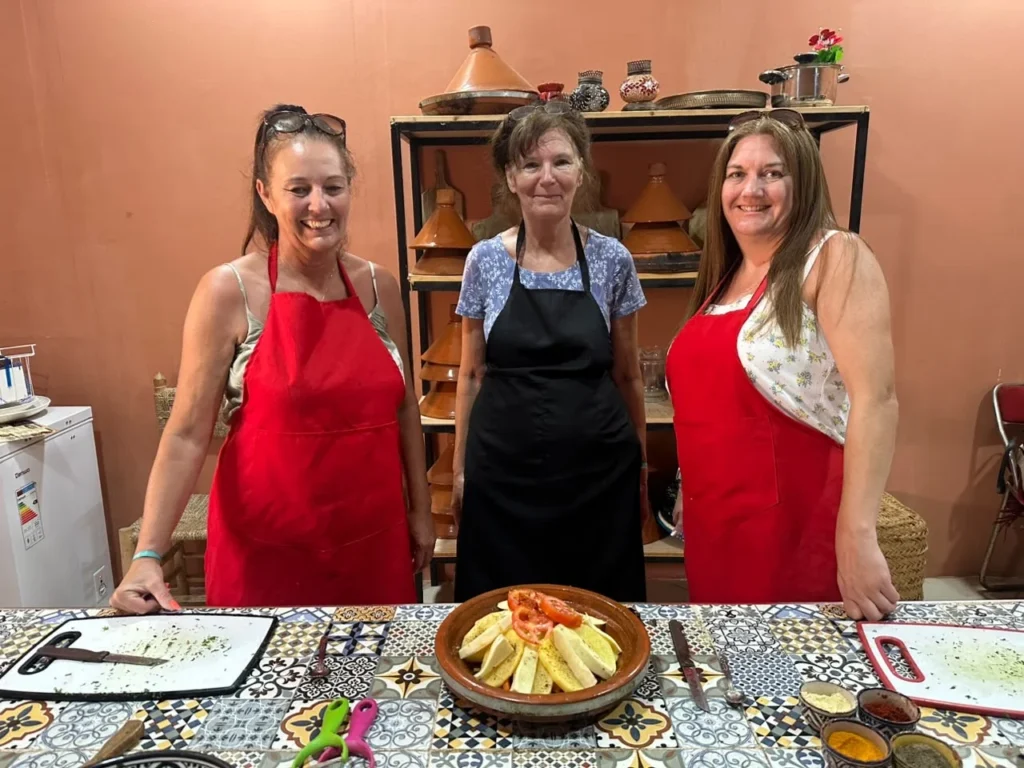
The Agadir cooking class is a hands-on Moroccan cooking class at a shared table, in aprons, with vegetables, spices and tagine pots at the centre of the cooking. It has published start times of 11:00 and 15:00, which are for planning, and costs €20 per person. We have not confirmed the menu for every session, so your class may prepare different dishes from the ones in our photographs. Tell us about dietary requirements or allergies before you reserve.
To make a day of Moroccan culture, you can pair it with our Agadir city tour, which includes Souk El Had, or an evening at the Agadir Fantasia dinner show; our guide to Fantasia in Morocco explains what you would be watching. If the weather turns, a class is one of the indoor options in our rainy day in Agadir guide, although we have not confirmed whether the class is held entirely indoors.
Reservations must be requested at least one day before. A request is not a confirmed booking until our team confirms it with you, and payment is in cash, in euros, on the day. All options are on our cultural experiences in Agadir page.
Questions about tagine in Agadir
Is a tagine the pot or the dish?
Both. The word names the conical pot and the stew cooked in it.
Is a tagine spicy?
Usually aromatic rather than hot. Wikipedia lists ginger, cumin, turmeric, cinnamon and saffron as common spices, with paprika and chilli in vegetable tagines.
Is there a vegetarian tagine?
Vegetable tagines exist. Ask whether any meat, stock or fat is used if that matters to you.
Can I eat tagine in Agadir without meat or fish?
Vegetable tagines are the usual answer, but we found no list of local restaurants, so ask when you order.
 Agadir Cooking ClassA hands-on Moroccan cooking class in Agadir, held at a shared table with two start times.
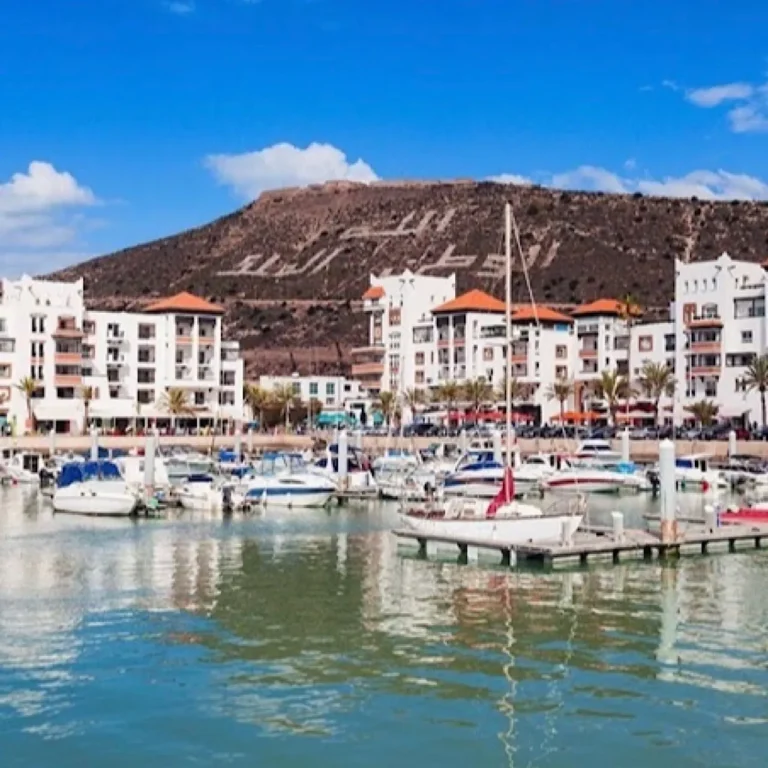 Agadir City TourA guided city tour with a driver and guide, stopping at the marina, Agadir Oufella, a mosque, an argan oil factory and Souk El Had.
 Agadir Fantasia Dinner ShowAn evening out from Agadir with a Fantasia show, a Moroccan dinner and belly dancing, with hotel pickup.
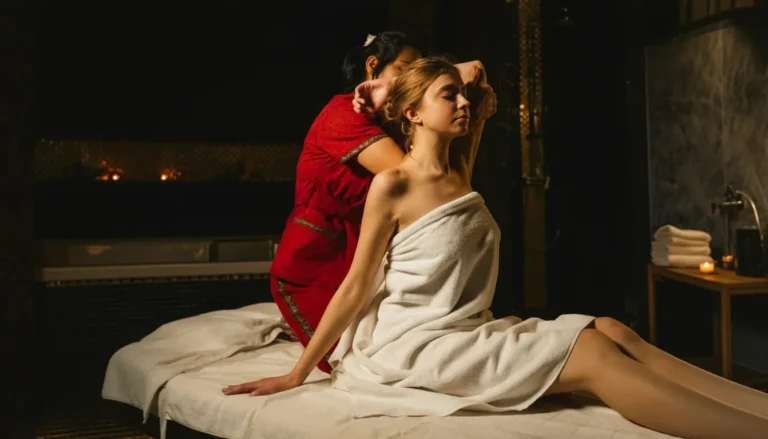 Traditional Hammam or Spa Hammam in Agadir: What Is the Difference?A traditional hammam is a local community bathhouse; a spa hammam is arranged for visitors. See how they differ, what to bring and what to ask before you book in Agadir.
- What Is Fantasia? Morocco’s Horse-and-Gunpowder Tradition ExplainedFantasia, or tbourida, is a Moroccan tradition of galloping riders and one shared volley of gunfire. Learn how a run works, where it comes from and how a dinner show differs.
Comments
No comments yet. Be the first to add one.