
A traditional hammam is the neighbourhood steam bath where Moroccans wash, talk and relax, and a spa hammam is a similar steam-and-scrub experience arranged for visitors, with the comforts of a spa. If you plan a hammam in Agadir, the kind you choose changes what you bring, who you share the space with and how the visit feels.
This guide explains how a traditional hammam works, where a spa hammam differs and what to ask before you book either. It uses two published sources, read on 21 October 2026, and it is clear about what we have not confirmed for our own Agadir hammam and massage.
Quick answer
A traditional hammam is a community bathhouse: you usually bring your own kit and may be scrubbed by an attendant, and the visit is social and physical. A spa hammam is more upscale and aimed at visitors, so a towel may be provided and the setting is more like a spa. Choose the traditional kind for an everyday local experience if you are comfortable with close contact, and a spa hammam if you want more comfort and privacy.
Our Agadir hammam and massage is a one-hour hammam followed by a one-hour massage with argan oil, with hotel pickup, at €30 per person, booked by appointment between 10:00 and 18:00. We have not confirmed whether it takes place in a neighbourhood hammam or a spa-style venue, so ask us before you reserve.
What happens in a traditional hammam
A traditional hammam has rooms of different temperatures. The tourism site Responsible Travel describes three: you rinse in the warm room, scrub in the hot room with black soap, and finish in the cool room to rest, where you may also have a massage. Wikipedia gives the same idea as a sequence of changing room, cold, warm and hot rooms, and notes that bathers wash with running water rather than sitting in a bath. In Fez the four rooms have their own names: goulsa, el-barrani, el-wasti and ad-dakhli.
The black soap is made from olives and olive oil, and the scrubbing glove, called a kess, is made by Moroccan weavers from goats’ hair, according to Responsible Travel. People usually go with friends or family and stay for two or three hours, and women typically use the hammam during the day and men in the evening. Many traditional hammams sit next to a bakery, because the two once shared the same heat.
Traditional hammam or spa hammam: the differences
| Detail | Traditional hammam | Spa hammam |
|---|---|---|
| Who goes | Local people, often with friends or family, for two or three hours | Visitors, in a more upscale setting built for spa tourism |
| What you bring | Your own kit: a water bowl, a kess glove, black soap, a plastic mat, a towel and shampoo | A towel may be provided |
| Atmosphere | Social and shared; physical contact is part of it | Set up as a spa visit |
| Men and women | Usually separate times: women by day, men in the evening | Ask the venue before you book |
| Price | Not quoted in the sources, so ask locally | Not quoted in the sources, so ask the venue |
Neither source gives Agadir prices, and prices in older guides date quickly, so we do not quote any. Confirm what is included before you pay.
Etiquette and what to wear in a traditional hammam
Responsible Travel says most women wear underwear in the hammam and that going naked is advised only if the local people do. Attendants may scrub you, although locals often wash or scrub each other, and massages are common, with a custom of returning the favour. Because physical contact is part of the experience, it may be uncomfortable for some visitors, and that is worth knowing before you choose a traditional hammam over a spa. The sources do not cover rules for men, so ask the venue.
Our hammam and massage in Agadir
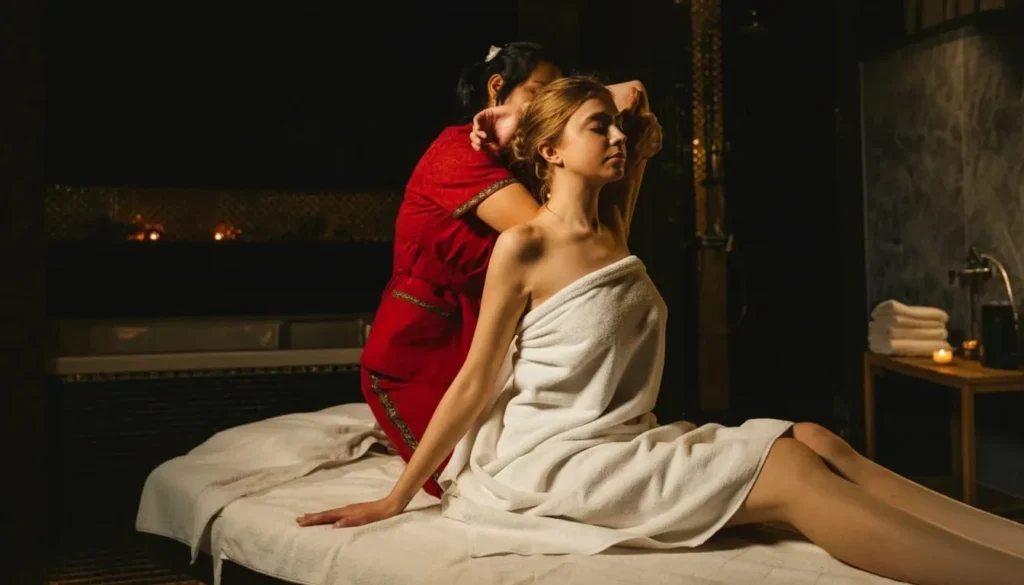
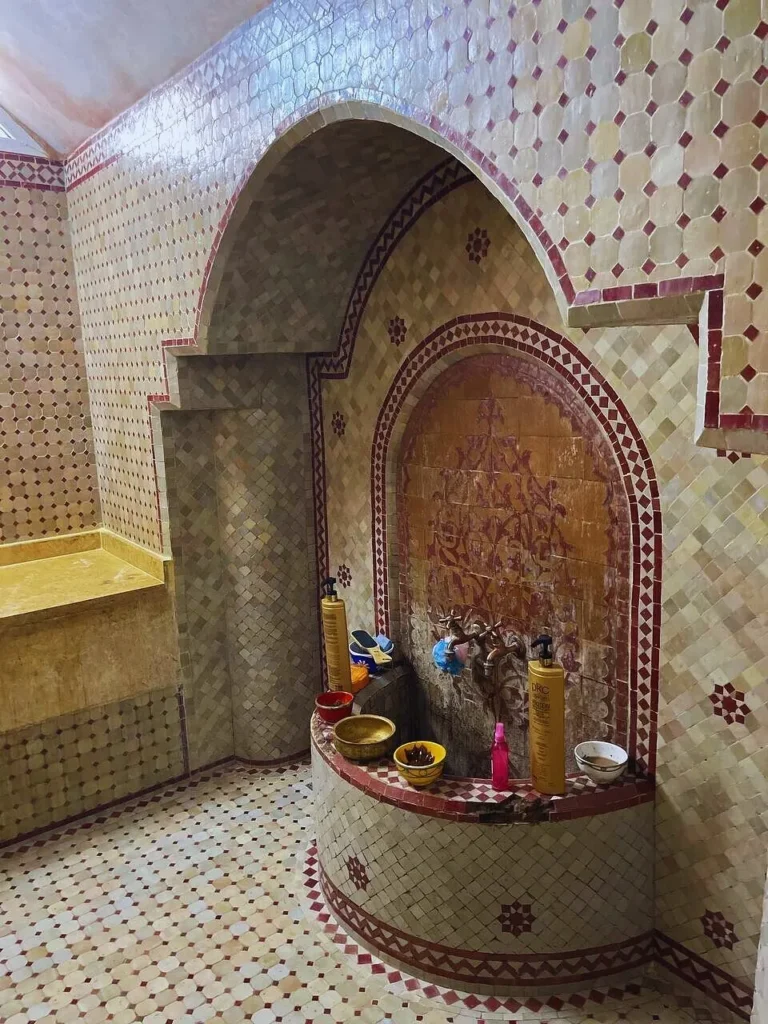
The session pairs a one-hour hammam with a one-hour massage using argan oil, a product of the Souss region around Agadir. There is no fixed departure: you choose a date, we agree the appointment time with you, and hotel pickup is included. Our photographs show a hammam niche covered in zellige mosaic tiles, a woman wrapped in a towel and two guests on massage beds beside candles.
What we have not confirmed is whether the venue is a neighbourhood hammam or a spa, whether men and women are separated, and what the venue provides, such as towels, soap or a scrub. Tell us about allergies, skin sensitivities, pregnancy or any medical condition before you reserve. It suits the day after, or the evening after, something active, and you can combine it with a daytime or evening plan, such as the Agadir cooking class or, as our guide to Fantasia in Morocco explains, a traditional evening show.
Reservations must be requested at least one day before. A request is not a confirmed booking until our team confirms it with you, and payment is in cash, in euros, on the day. All options are on our cultural experiences in Agadir page. If rain is forecast, our guide to a rainy day in Agadir lists what works indoors.
A first-timer’s checklist for a traditional hammam or spa
- Ask whether the venue is a neighbourhood hammam or a spa hammam.
- Ask whether men and women are separated, and at what times.
- Ask what is provided, and what you should bring.
- Decide how comfortable you are with an attendant scrubbing you.
- Tell the venue or us about allergies, skin sensitivities, pregnancy or medical conditions.
- Keep the rest of the day free, since the sources describe local visits as lasting two or three hours.
Questions about a traditional hammam
Is a hammam the same as a sauna?
No. A hammam is a steam bath in which people wash with running water, rather than sitting in a bath, according to Wikipedia, and the washing and scrub are part of the visit.
Do I have to undress completely?
Not necessarily. Responsible Travel says most women wear underwear, and that going naked is advised only where local people do. Ask the venue about its own rules.
How long does a traditional hammam take?
Responsible Travel says people usually stay two or three hours at a local hammam. Our session is one hour of hammam plus one hour of massage.
Is there a separate time for men and women?
Typically yes in traditional hammams: women by day and men in the evening. We have not confirmed the arrangements for our own session, so ask us when you reserve.
 Agadir Hammam & MassageA one-hour hammam followed by a one-hour massage with argan oil, booked by appointment during the day.
 Agadir Cooking ClassA hands-on Moroccan cooking class in Agadir, held at a shared table with two start times.
 Agadir Fantasia Dinner ShowAn evening out from Agadir with a Fantasia show, a Moroccan dinner and belly dancing, with hotel pickup.
 Tagine in Agadir: Types, How It Is Cooked and What to OrderA tagine is both a clay pot and the slow-cooked stew inside it. Four classic types, how to order one and what we could not confirm about eating tagine in Agadir.
- What Is Fantasia? Morocco’s Horse-and-Gunpowder Tradition ExplainedFantasia, or tbourida, is a Moroccan tradition of galloping riders and one shared volley of gunfire. Learn how a run works, where it comes from and how a dinner show differs.
Comments
No comments yet. Be the first to add one.