
Fantasia in Morocco is a display of horsemanship in which a line of riders in traditional dress gallops down a track and fires their guns together in a single volley. In Morocco it is called tbourida, from baroud, the Arabic word for gunpowder. In 2021 UNESCO added tbourida, the Moroccan equestrian art, to its Representative List of the Intangible Cultural Heritage of Humanity.
If you have seen a Fantasia dinner show on an Agadir programme and wondered what you would actually be watching, this guide explains the tradition first and then how an evening show relates to it. It relies mainly on UNESCO’s listing and says where other sources disagree.
Quick answer
Fantasia, also known as tbourida, is a traditional equestrian performance. A troupe of riders gallops in line and, at the end of the run, fires its rifles together. UNESCO describes the shots as blanks. The tradition belongs to festivals, weddings and competitions, and a dinner show is a staged evening version that sits alongside other acts. Our own evening in Agadir includes a Fantasia show, a Moroccan dinner and belly dancing, and we have not confirmed the order of the programme.
How fantasia in Morocco works
The basic unit is the troupe. UNESCO describes a troupe with an odd number of riders and horses, between 15 and 25, who line up side by side with the leader in the middle. The educational site Teach Mideast calls the troupe a sorba and its leader the mokkadem, who sets the pace of the gallop.
A performance has two parts:
- The hadda, or salute. The riders enter at a trot, perform a drill with their arms and return to the starting point.
- The talqa. The troupe sets off at a gallop and fires a round of blank shots together, which UNESCO describes as simulating a collective departure for war.
The hardest part is timing rather than speed. Teach Mideast says the most difficult task is getting every horse moving together and every gun firing at the same moment, and Wikipedia’s article on the performance says a well-timed volley is heard as a single shot.
Before a performance, riders often give it a spiritual meaning: UNESCO notes that they perform ablutions and pray together first. Their costume, with a turban and draped clothing, represents their tribe or region, and they carry a small copy of the Koran and an old Arab sword. Both Arabian and Barb horses take part, according to Teach Mideast.
Fantasia in Morocco at a glance
| Detail | What the sources say |
|---|---|
| Moroccan name | Tbourida, from baroud, the Arabic word for gunpowder |
| Troupe | An odd number of riders and horses, 15 to 25, led from the middle |
| Two parts | The hadda (salute at a trot) and the talqa (gallop and one volley of blanks) |
| Where it is seen | Festivals called moussems, weddings, cultural events and competitions |
| Recognition | UNESCO Representative List, 2021 |
| Age of the tradition | UNESCO: dating back to the sixteenth century |
Where does fantasia come from?
UNESCO’s listing says the practice dates back to the sixteenth century and describes it as a simulation of a sequence of military parades, shaped by ancestral Arab-Amazigh conventions and rituals. Some accounts reach further back, linking it to Numidian cavalry in antiquity, while others place its tribal form in the seventeenth century. Wikipedia’s article itself flags weak sourcing for several of those claims, so treat any single date with care. We use UNESCO’s.
The name travels too. Teach Mideast notes that outside North Africa the tradition is often called fantasia, and that tbourida is the Moroccan word.
A living tradition, not only a show
UNESCO says the tradition is handed down within families, through oral tradition and by observation. Teach Mideast reports that Morocco’s agriculture ministry created an organisation, SOREC, in 2003 to promote tbourida, that about 1,000 troupes are registered with it, and that around 330 of them compete each year, usually around October, at the Week of the Horse in El Jadida for the Hassan II National Tbourida Trophy.
Outside competition, fantasia in Morocco is performed at cultural events, weddings and moussems, the large annual gatherings with music and celebration. Similar traditions exist in Algeria and elsewhere in North Africa, usually with their own formats: Teach Mideast says Algerian troupes typically have nine to eleven riders.

Seeing fantasia in Morocco: festival or dinner show?
A moussem or a competition shows the tradition at full scale, but those events follow festival calendars and rarely fit around a visitor’s week. A dinner show is built for travellers: it brings riders, gunfire and a Moroccan dinner into one evening you can request in advance.
Our Agadir Fantasia dinner show is that kind of evening. It includes hotel pickup, the Fantasia show, a Moroccan dinner and belly dancing. It costs €40 per person, runs on Monday, Wednesday and Friday, and has a published departure time of 19:00, which is for planning; we agree your pickup time after you send a request. Our photographs show horsemen in white robes with bursts of flame, a performer breathing fire and acrobats forming a human pyramid, so expect more than riding alone.
What we have not confirmed is the order of the programme, the dinner menu, the finish time, or whether the riding follows the hadda and talqa as a competition troupe would. Ask us before you reserve if any of that matters to your group. To make a full cultural day, you could add a daytime experience such as the Agadir cooking class or the Agadir hammam and massage, checking that the times do not overlap.
Reservations must be requested at least one day before. A request is not a confirmed booking until our team confirms it with you, and payment is in cash, in euros, on the day. Every option is listed on our cultural experiences in Agadir page, and our guide to things to do in Agadir covers the rest of the city.
Questions about fantasia in Morocco
Is fantasia the same as tbourida?
In Morocco, yes: tbourida is the Moroccan name for what is widely called fantasia abroad. Related traditions in Algeria and other North African countries have their own formats and terms.
Do the guns fire real bullets?
UNESCO describes riders firing rifles loaded with blanks during the talqa, the galloping part of the performance.
Is it only a tourist show?
No. The sources describe it as a tradition performed at moussems, weddings, cultural events and national competitions, and a dinner show is one way visitors can see a version of it.
Is the Agadir evening suitable for children?
We have not confirmed age limits or rules for children. Message us with the ages in your group before you plan.
 Agadir Fantasia Dinner ShowAn evening out from Agadir with a Fantasia show, a Moroccan dinner and belly dancing, with hotel pickup.
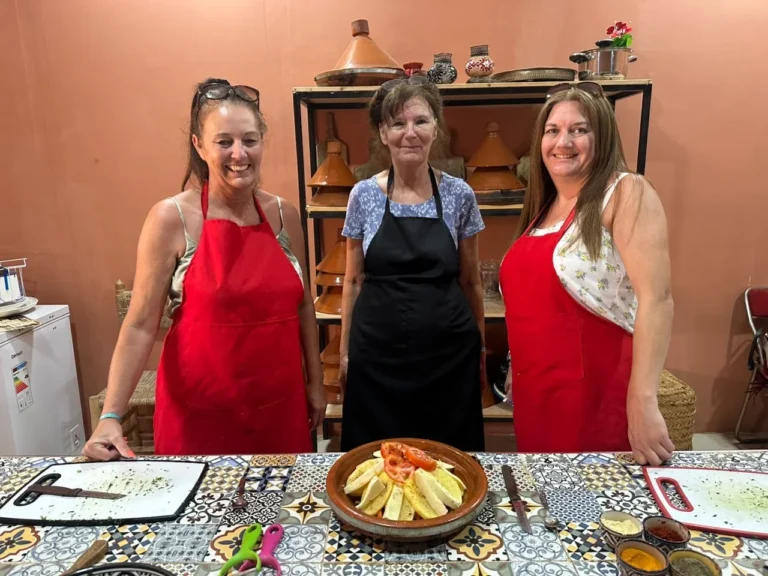
 Agadir Cooking ClassA hands-on Moroccan cooking class in Agadir, held at a shared table with two start times.
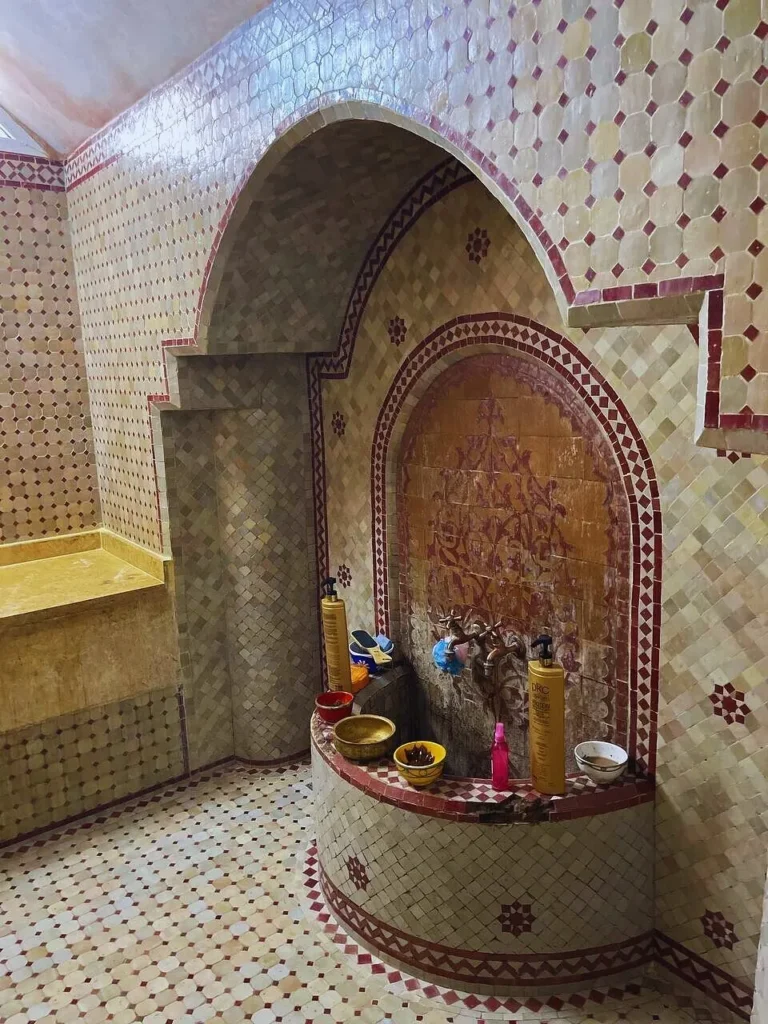 Agadir Hammam & MassageA one-hour hammam followed by a one-hour massage with argan oil, booked by appointment during the day.
 Tagine in Agadir: Types, How It Is Cooked and What to OrderA tagine is both a clay pot and the slow-cooked stew inside it. Four classic types, how to order one and what we could not confirm about eating tagine in Agadir.
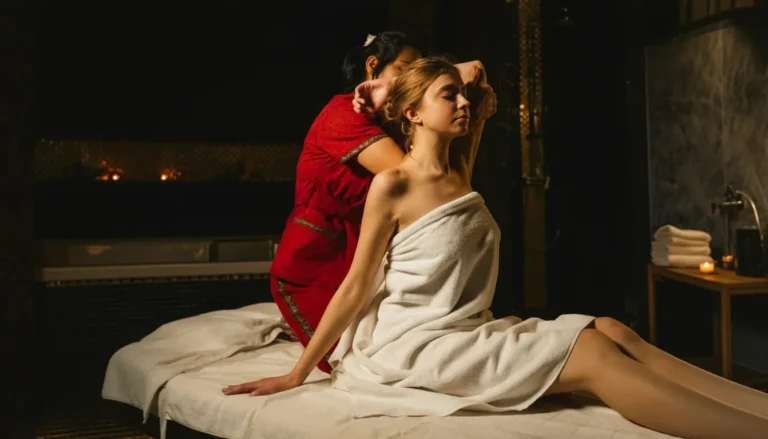 Traditional Hammam or Spa Hammam in Agadir: What Is the Difference?A traditional hammam is a local community bathhouse; a spa hammam is arranged for visitors. See how they differ, what to bring and what to ask before you book in Agadir.
Comments
No comments yet. Be the first to add one.